
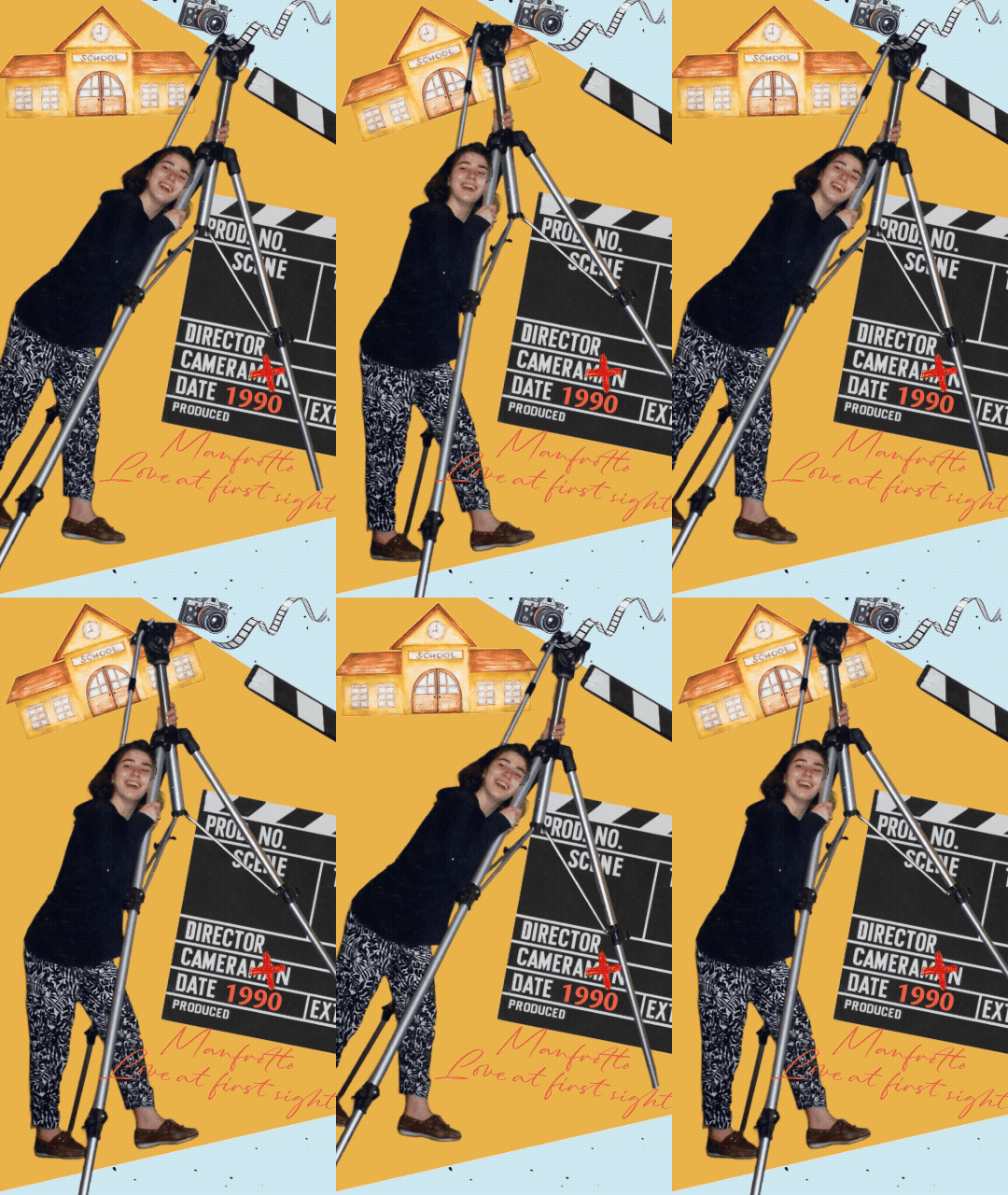
Learning to frame.
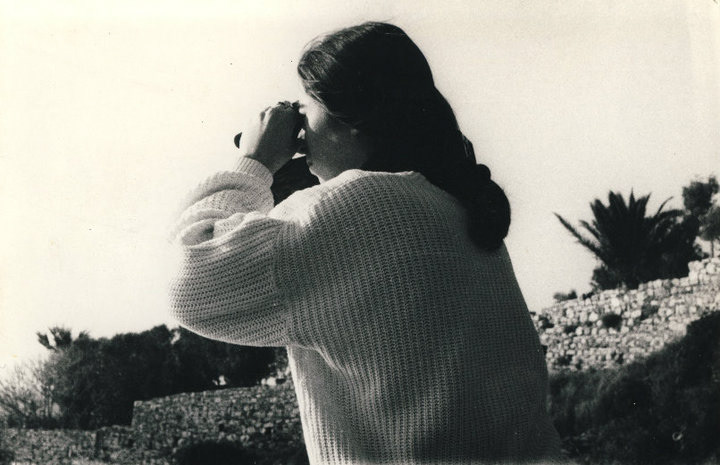
Sharpening my lens.
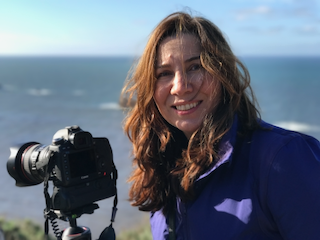
Framing the world.
I am a woman filmmaker and an immigrant. Both identities taught me the same thing: how to claim space in rooms that weren’t built for me. In a male-dominated field, I’ve had to claim space behind the camera and hold it. That training — learning to notice who gets defined, who gets flattened, who is allowed complexity — is the same muscle I use as an immigrant reading a room. These aren’t separate experiences. They’re one lens, sharpened by both. It shapes everything I make — and everything I see.
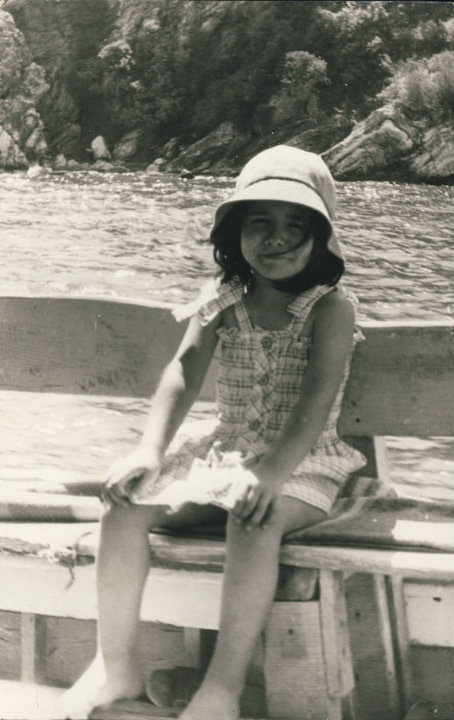
Young me. Anatolian by body, Aegean by soul.
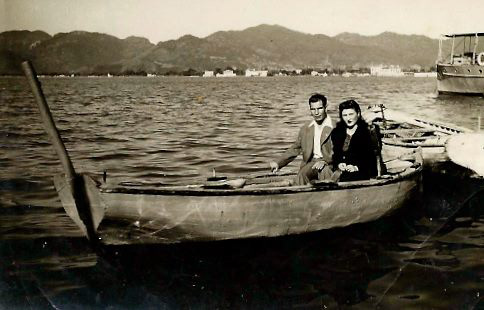
My grandparents, anneannem ve dedem.
My home by birthright is the Aegean coast of Türkiye — Anatolian by body, Aegean by soul. It is where Hellenic and Anatolian cultures have long been rootbound — soaked in sea salt and aged in the sun, but also marked by cycles of violence and layers of grief.
As a child, I spent summers in a house across the water from Chios, the Greek island. The current would carry objects with Greek labels to our shore — plastic bottles, junk, random belongings — and my brother and I would scavenge for them like treasure. Their alphabet was impossible to read, yet we ate the same food, listened to the same music, bathed in the same waters. How can you draw a line in water and separate cultures? I grew up believing borders were less fixed than they appeared on maps. It was my first sense of us and them — where “them” was a mysterious other I had to piece together from whatever washed up. For my ancestors, the crossing between those shores wasn’t a child’s game. It was survival.

Across the water from Chios.
Back in Türkiye, I never had to think about who I was in racial terms — a convenience that comes with the privilege of being part of the dominant culture. Here, I had to. My identity is often packaged as “Middle Eastern,” a colonial term and a category loaded with preconceptions. On government forms, people from the region have long been folded into “White,” even when our daily experience tells a different story. My skin is white as feta cheese. I see myself off-White, and that’s how I’m seen. My blurry accent raises eyebrows before I finish a sentence. My whiteness, my Americanness, or my background shifts depending on who’s looking and what’s at stake for them.
The quiet negotiation of immigration isn’t with the country. It’s with yourself — about how much of who you are you’re willing to trade for the chance to belong. I traded too much. And still didn’t fit in. So I conformed. Muted the parts that didn’t fit, stayed in my lane, tried to become someone else to earn a seat. I double-stitched my credentials — not for the knowledge, but to make up for the native tongue I’d lost. The doors opened. What was behind them didn’t.
No Single Story: Amplifying the Voices of Asian American and Native Hawaiian, Pacific Islander Early Educators is a NAEYC book project bringing AANHPI early childhood educators from across the diaspora together to share how their intersecting identities and lived experiences have shaped their work in early education and care. Making these short films from the 32 interviews, I studied participants at different stages of their identity journeys — each finding alternative paths into belonging by naming themselves on their own terms, refusing flattened categories, building counter-narratives to dominant culture. What draws me to their work is not a shared identity, but a shared process — what Viet Thanh Nguyen calls expansive solidarity, kinship that grows between unlikely others through difference rather than around it.
I wonder how different my own path might have been if even one of my teachers had modeled that for me.
This is where I sit in the same silence as the authors. Interview by interview, something shifts. One author described identity as something that must be negotiated — and if lost, reclaimed. Another spoke of writing as an act of collective resistance. I am learning how to belong in my own story by standing alongside them. That is expansive solidarity in practice.
That same muscle is what I brought to the edit room — to hold individual voices in a collective frame with their unique patterns visible, so the emotional truth of No Single Story can be felt. Not just understood.
Amplifying their voices, my own grows stronger. The parts I once muted, I am learning to claim. With every story I help bring into the light, I find more room for my own. And in the world we are building together, I am beginning to belong.
-filiz
May 2026, Seattle, WA